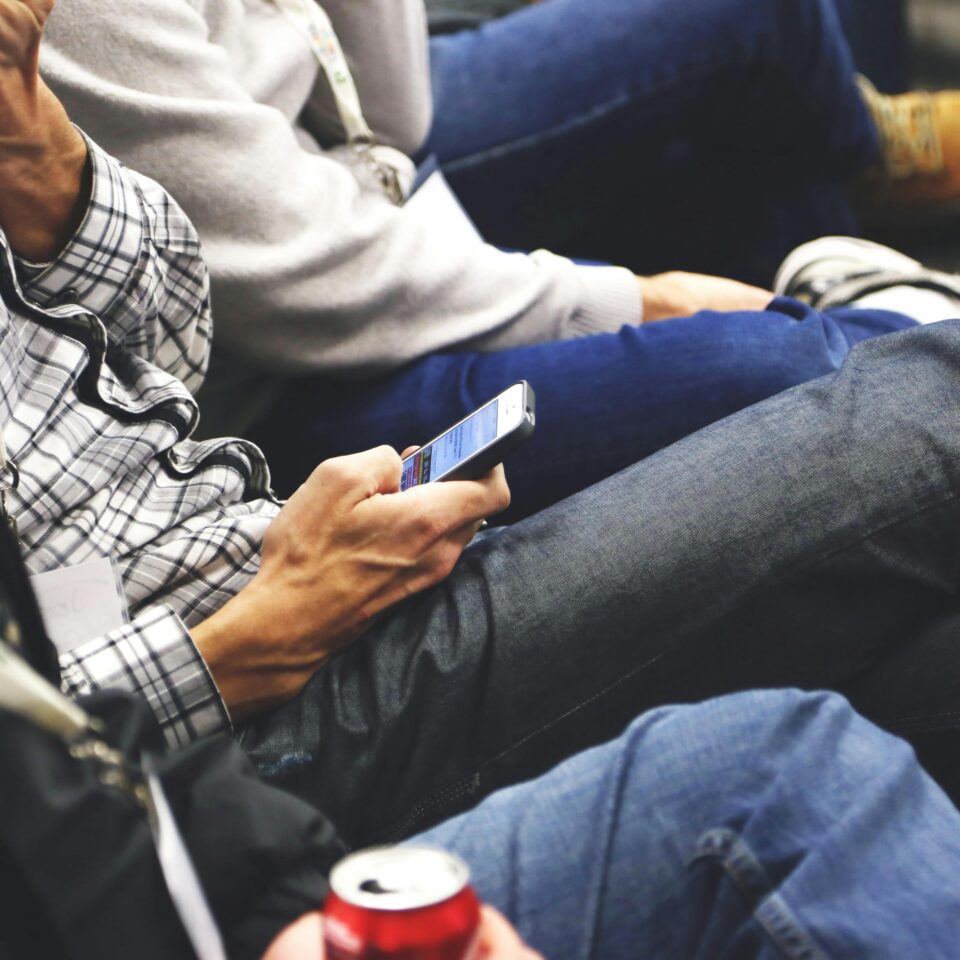



There is a moment happening right now that you will never get back. Not a milestone, nothing you would frame, just an ordinary moment, the kind that quietly makes up a life. A child splashing in a pool. A conversation half-heard. A sunset noticed only once it is almost gone. And somewhere close by, a phone is glowing. The relationship between our phones and our presence is the quiet drama of modern life, and most of the time we are losing it without ever noticing there was anything to lose.
The numbers we would rather not look at
The average person picks up their phone more than 150 times a day. We give four to six hours to a screen, and for many of us it is considerably more. By the time a child born today turns eighteen, their parents will have spent the equivalent of years looking at a device rather than at them. Not bad parents, not absent ones just simply human parents, living inside a world built to pull their attention elsewhere.
None of this is an accident. Every notification, every infinite scroll, every algorithmically chosen post exists because somewhere a very capable system learned precisely what keeps us looking. Our phones are not competing with our boredom. They are competing with our lives and, for now, they are winning.
The side of the pool
Picture the side of any swimming pool on a weekday evening. In the water, a class of small children is doing something genuinely remarkable: learning, struggling, delighting, now and then glancing up to find a parent on the side. And along that side, most of the parents are looking down at a phone.
This is not said to shame anyone; nearly all of us have been that parent. The phone comes out not from any shortage of love but because the pull has grown so constant, so habitual, that it happens before a decision is ever made. One moment you are watching; the next you are scrolling, and you did not choose it.
What passes in that moment is small and unrepeatable: the instant something clicks and a young face lights up, the private celebration when a new thing finally sticks. Nobody films these. They are the texture of a childhood, and they pass whether or not anyone is watching. By the time the parent looks up, the moment is already somewhere else.
What a phone is actually doing to your presence
What the phone takes is not only time. What it really does is fragment presence. Every glance mid-conversation sends a quiet signal that this person in front of you is not quite enough to hold your attention. Every reach in a still moment trains you to be a little less comfortable with stillness. Every notification answered the instant it arrives teaches the nervous system that everything is urgent, that being fully here is something to escape.
Presence, it turns out, behaves like a muscle: we lose what we do not use. This is why so many of us feel faintly absent from our own lives. Nothing is wrong, exactly. We have simply spent years practising being somewhere else. It is the same restlessness explored in the most expensive thing you own is your attention and the quiet sense that life is passing slightly faster than we can feel it.
What is on the other side of the screen
On the other side of the screen is the thing that was already there before you looked away. A child learning to float. The person across the table saying something they may not say twice. It asks nothing of you, no response, no like, no share. It needs only that you be there for it.
This was never really about the phone
Blaming the phone is too easy, and in any case it lets us off lightly. The phone is only the latest and most sophisticated version of something very old: our search for a way out of the discomfort of being fully present… the discomfort of stillness, of not quite knowing what to do with our hands, of sitting alone at a table in a café. The gap was always there. The phone simply fills it faster than anything in human history, every second of every day, so that we never feel the discomfort long enough to wonder what it might be pointing us toward.
A quieter practice for being present
You do not need to delete anything or disappear on a digital detox. You need only to notice. Notice the moment your hand reaches for the phone before your mind has decided anything. Notice what you were feeling in the second before it reached, and what you might have seen had it stayed in your pocket. That small act of noticing, repeated, is itself a kind of practice and the same returning that sits at the heart of what meditation actually is. Done often enough, it changes everything: not because you will put the phone down forever, but because once you can see the pattern clearly, you are no longer inside it.
This is the whole reason we built Pala, not to take the phone out of your life, but to sit quietly alongside it: a small, screenless band on the wrist that offers a gentle haptic nudge, sometimes a slow rhythm to breathe with, a reminder that life is happening and that you have to be here to feel it.
The screen between you and your life is thinner than it looks, and it lifts the moment you remember to look up. In the small gap between the reach and the decision, between the phone and your presence, your life is already waiting. If this resonates, you may find a companion piece in coming home to the body, a gentler route back into the present.
Pala is coming.
We’re building something small and quiet. A band you wear, not a screen you check. No notifications. No feed. No app demanding your eyes. Just a gentle reminder, felt rather than seen, to come back to the one life you’re actually living.
It isn’t ready yet. When it is, the people on our list will be the first to know, before anyone else, before any announcement.
If something in this piece landed, leave your email below. We’ll only write when we have something worth your attention. That’s the whole promise.
Related reading
- The Most Expensive Thing You Own Is Your Attention
- Where Your Life Actually Happens
- Pala Time: A Calmer Answer to Screen Time for Kids
New here? Start with our guide: How to Be More Present in a Distracted World.